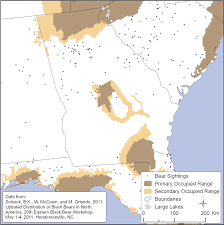
Black bear populations in the eastern United States are highly fragmented, existing within approximately 10% of their historic range. Here in Georgia, there are three distinct populations, the North Georgia population associated with the Appalachian Mountains (n = ~ 4,000), the central population associated with the Ocmulgee River drainage system (n = ~300 , and the southern population in and surrounding the Okefenokee Swamp (n = ~ 800) that is associated with the north Florida population. Since 2020, we have been working closely with Georgia DNR to better understand the spatial distribution and abundance of these populations to provide management recommendations.
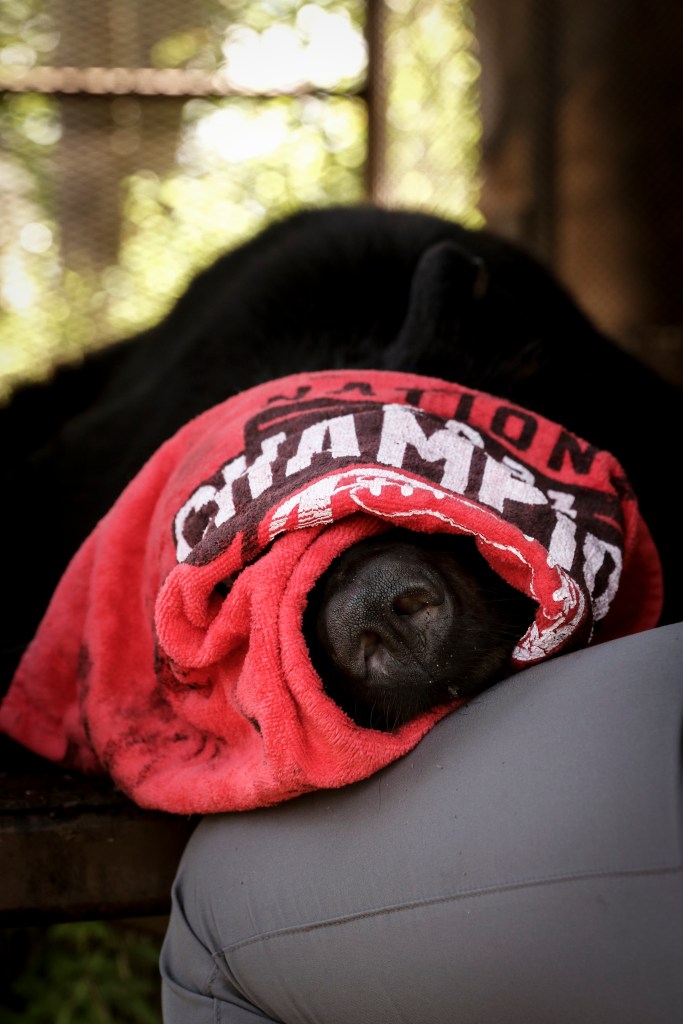
North Georgia – We recently completed a study in North Georgia examining the impacts of hound-hunting on black bear behavior and survival. This was important because hunting bears with hounds is a long-standing tradition across the entire Southern Appalachian region. However, hunting bears with dogs was only offered in southern Georgia until recently. During the fall of 2019, the first bear dog-hunting opportunity – a quota hunt – was offered in north Georgia on the Chattahoochee and Chestatee Wildlife Management Areas. This research addressed the effects of this special opportunity bear dog hunt relative to other forms of harvest in order to improve our understanding of the impacts hound hunting had on bear movements, home range, survival, and reproduction.
Central Georgia – Our smallest population in Georgia, the Central Georgia population suffers from spatial and genetic isolation. During 2012-2016, an extensive research was conducted within the population to estimate population size and viability. We recently began a second phase of this research, led by current MS Student Ben Carr, to develop an updated estimate of population size and assessment of genetic diversity using a combination of GPS collars and genetic hair snare corrals.
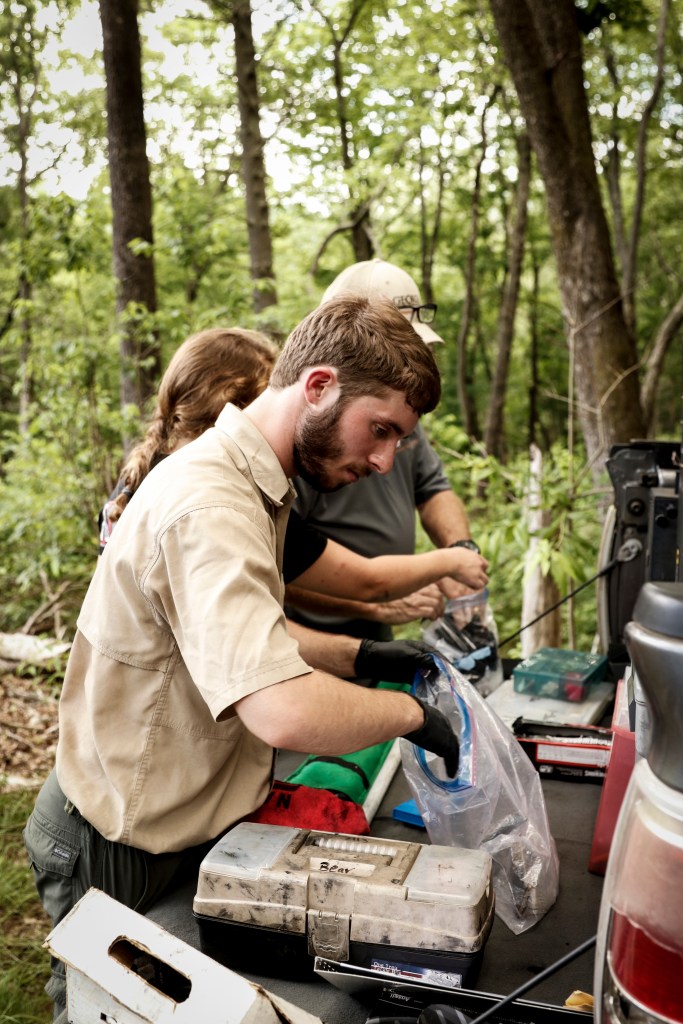
South Georgia – This population was last studied in the late 1990s which estimated the population of approximately 800 bears. During that study annual harvest of bears in averaged 43 bears/year which was thought to be sustainable. However, recent sightings and increased harvest numbers suggest the bear population has expanded in spatial distribution and likely abundance, leading to a need to obtain accurate and contemporary population estimates for this population. Beginning in 2023, we began an extensive study to develop those estimates using a combination of GPS collars, wildlife game cameras, and hair snare corrals.

 Kohl Wildlife Lab