Chelonians, the group that includes turtles and tortoises, are the most threatened taxa of vertebrates, with over 50% of species listed as vulnerable by the International Union for Conservation of Nature due in large part due to the illegal pet trade. To help conserve the populations, our lab has collaborated with the Tuberville Lab to address long-term declines in turtle and tortoise populations.
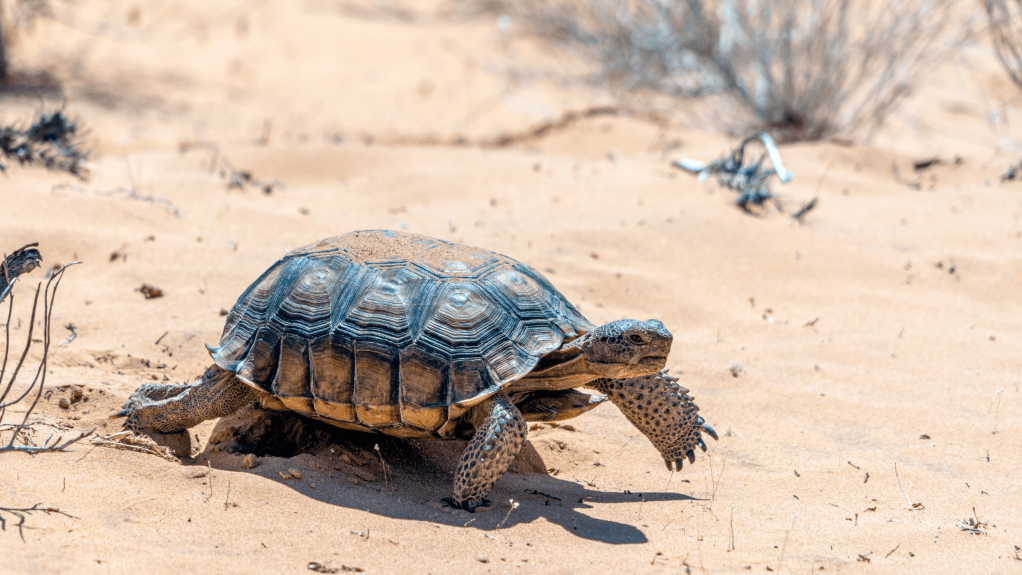
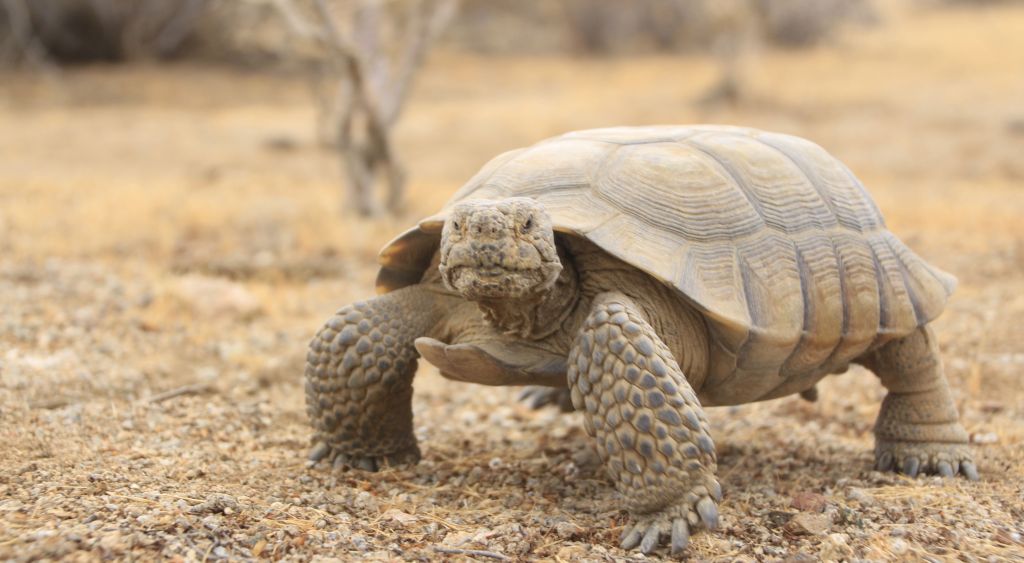
This includes a recent study, led by MS student Collin Richter, to quantify multi-year space-use and survival of head-started Mojave desert tortoises following release by radio-tracking tortoises reared with and without an indoor-rearing component. We found that space-use varied by husbandry treatment, but survival did not. Additionally, we used trail cameras to capture predation attempts on 3D-printed tortoise models to evaluate how tortoise size and human infrastructure affect a tortoise’s risk of predation in the Eastern Mojave Desert and how risk changes between seasons. This information is being used to inform recovery efforts for the species.
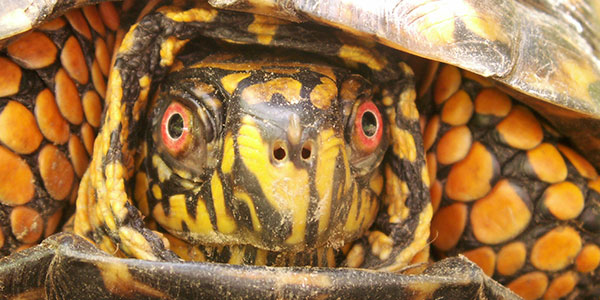
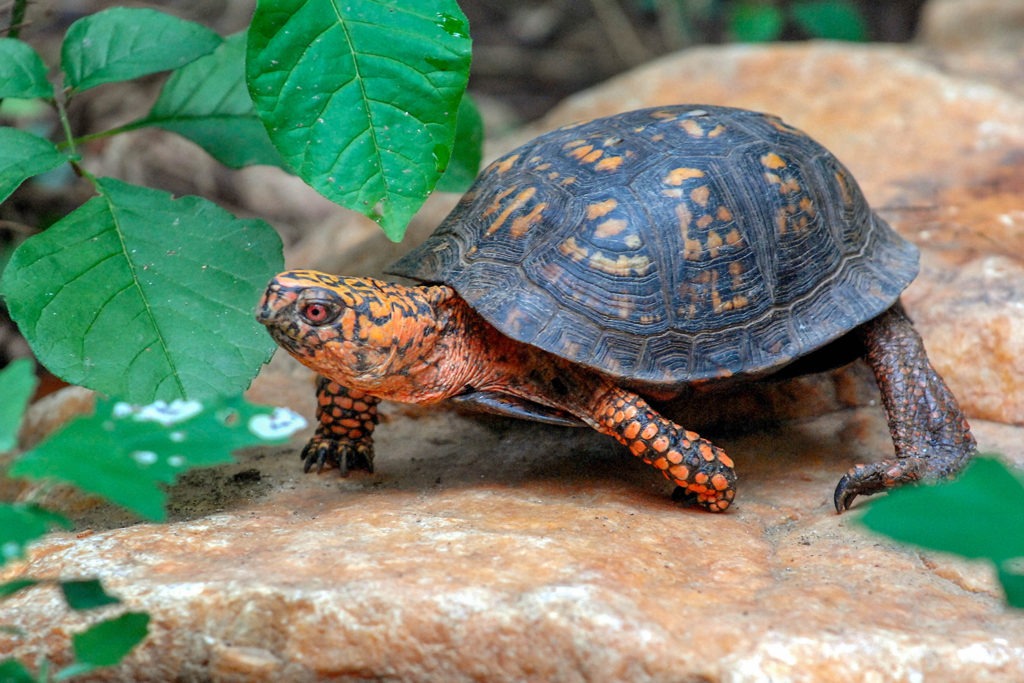
More recently, we again partnered with the Tuberville lab including MS Student Emma Browning and MS Student Ryan Rimple to assess behavior, survival, and disease risk of releasing long-term captive and confiscated eastern box turtles on the Savannah River Site near Aiken, SC. We monitored 1) the survival and space use of LTC and sympatric resident turtles, 2) reproductive output and genetic integration in confiscated, LTC, and resident turtles, and 3) the vertical transmission of ranavirus in our system. Our results broadly indicate that the translocation of confiscated and LTC turtles may be an effective component to local population recovery, presuming disease risks can be managed.
Relevant publications from this research:
Successful post-translocation reproduction and genetic integration of eastern box turtles
Factors influencing risk of predation by subsidized predators on juvenile Mojave desert tortoises
Translocation of Long-Term Captive Eastern Box Turtles and the Efficacy of Soft-Release: Implications for Turtle Confiscations
Effects of head-starting on multi-year space use and survival of an at-risk tortoise
 Kohl Wildlife Lab